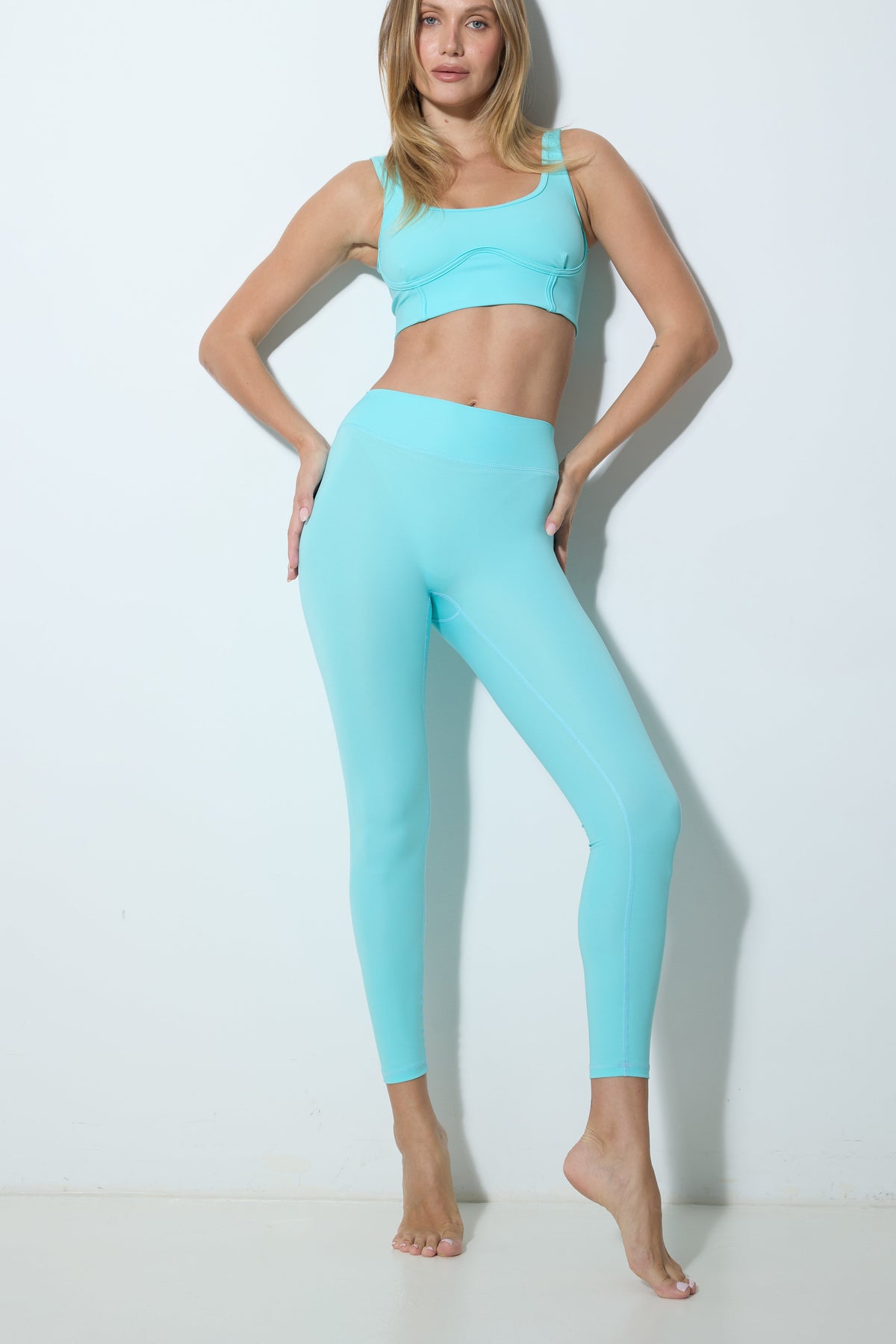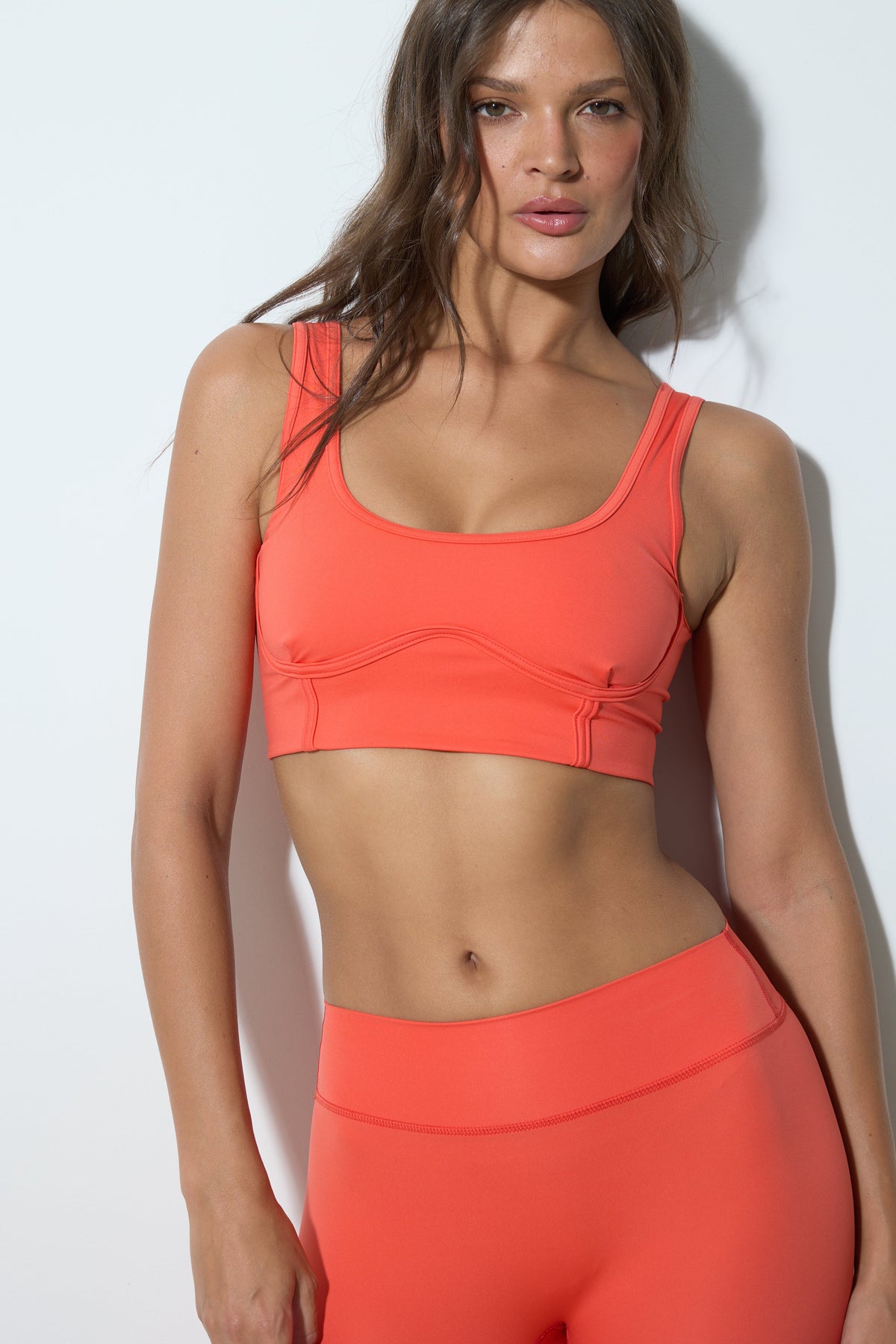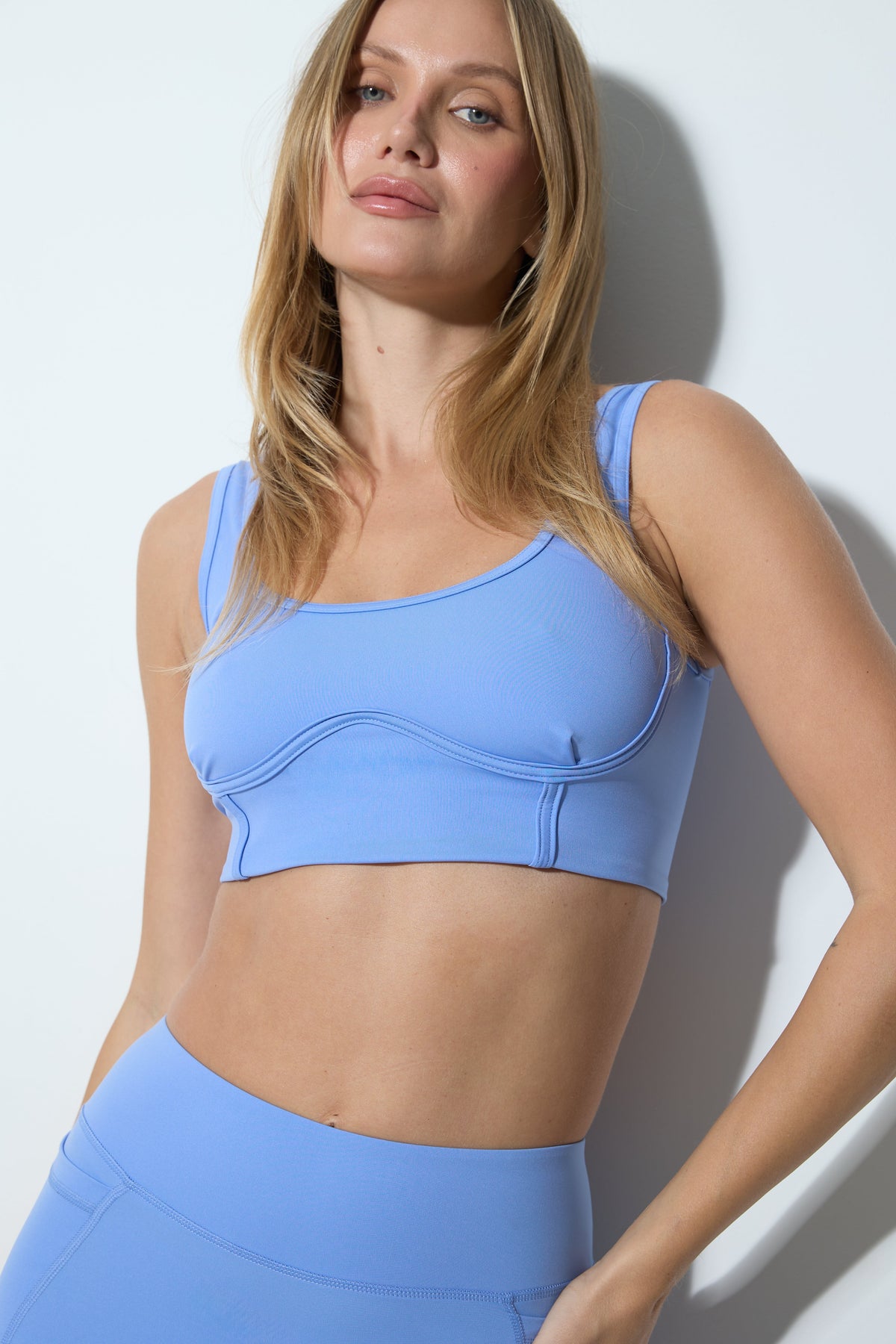
Yoga is much more than just a set of physical exercises – it's a practice that combines spiritual development, breath control, and conscious movement. A key element of this discipline is comfort, allowing us to fully focus on breathing and the technique of the asanas. One of the most important pieces of yoga attire is a sports bra , often simply called a yoga bra in this context.

What makes the right yoga bra so important?
Imagine trying to achieve a precise pose (asana) like Adho Mukha Svanasana (Downward-Facing Dog) or Bakasana (Crow Pose) , and every attempt to twist your torso or shift your weight onto your hands results in you having to adjust an ill-fitting bra. Such discomfort distracts you from proper body alignment and deep breathing. A well-fitting bra, on the other hand:

- Provides breast stability and even weight distribution.
- It facilitates breathing without compressing the chest or restricting chest mobility.
- It allows you to focus on practice , without stress and constantly adjusting your straps.
It is therefore worth spending some time choosing a model that will meet your individual needs.
Step 1: Fit and Sizing – The Foundation of Comfort

The first and most important aspect is choosing the right size. We often don't realize how many problems can arise from wearing a bra that's too tight or too loose. Before you begin your search:
- Measure the circumference under the bust and around the fullest part of the chest.
- Compare dimensions with manufacturer's size charts, as sizes may vary.
- Try on a bra and perform a few dynamic movements: twist your torso, raise your arms, bend over.
Important: The band should fit snugly but not constrict. The cups should accommodate the entire breast, and the straps should be secure and not dig in or slip.
Step 2: Support Level – Choose What Fits Your Practice
Consider which styles of yoga you practice most often. If you prefer:

- Hatha, Yin, Kundalini, or Iyengar – the pace of practice is more relaxed, and the poses are often held for longer periods. Here , light to medium support is usually sufficient.
- Ashtanga or Vinyasa are more dynamic, featuring fluid transitions between asanas and elements of balance. In these situations, you may need stronger bust support to feel fully stable.
A well-fitting yoga bra should therefore match the intensity of your practice. Choosing a model with the right level of support will help you avoid uncomfortable bumps or shifting of your bust during inverted or more demanding poses.
Step 3: Breathable and flexible materials
In yoga, it's important that your outfit "works" with your body. Therefore, pay attention to:
- Breathable materials – allow moisture to escape, keeping your skin dry and you feeling fresh even after a more intense Vinyasa sequence.
- Flexible fibers – allow for comfortable stretching and a wide range of movements.
- Soft seams – prevent chafing and irritation, especially around the armpits and under the bust.
For many people, the best choice is a bra that combines high-quality (quick-drying) polyester with elastane. This composition provides both support and thermal comfort.
Step 4: Construction and details – straps, clasps, cutouts
Even if you find the perfect material, seemingly small elements will determine your comfort during asanas:
- Straps : Wide and adjustable, they distribute pressure on your shoulders while allowing you to adjust them to your figure. Cross-back straps are great for maintaining proper posture and adding stability.
- Fastening : Some sports bras slip on over the head, while others have a classic hook-and-eye closure. Consider which will be more comfortable for you to put on and take off, especially after an intense workout when skin may be damp.
- Cutouts and coverage : If you practice inverted yoga poses (handstand, candle), make sure the front of your bra is properly covered to avoid breasts falling out or revealing too much skin.
Step 5: Fitting – Motion Test
Buying a sports bra without trying it on can end in disappointment. If you order online, try it on at home as soon as it arrives – you have 14 days from delivery to withdraw from the purchase. Put the bra on and:
- Do some bends and slight forward and backward bends.
- Check if you can breathe freely by taking deep breaths in and out.
- Raise your arms up as if you were going to do the “tree” pose (Vrksasana), watching that the straps do not slip off.
If you feel comfortable with everything, there's a good chance this model will be right for your practice.
Step 6: Style and individual preferences
Although comfort and functionality are our primary priorities in yoga, we don't have to sacrifice aesthetics. Choose a color or pattern that energizes you and motivates you to get on the mat. For some people, consistency is important to the overall outfit – a cohesive pairing of a bra with leggings or yoga pants can add even more joy to your practice.
However, remember not to prioritize appearance over quality and fit – comfort should always be a priority.
To sum up - what key things should you pay attention to?
Choosing the right yoga bra is key to achieving complete focus and satisfaction from your practice. Pay attention to:
- Size and fit – the foundation of comfort and stability.
- Level of support – adapted to the type of yoga practiced (calm vs. dynamic).
- Breathable, flexible materials – allowing free airflow and movement.
- Well-thought-out cut – straps, cutouts and any fastenings are details that are of great importance.
- Try-on and test in a few simple steps – to avoid surprises after purchase.
- Style and color – choose a design that will make you feel extra pleasure every time you step on the mat.
Yoga is meant to be a pleasure for both body and mind. When you wear a properly fitting bra, you can fully focus on your breathing, precision of movement, and relaxation . Proper support will allow you to derive even more joy from discovering new asanas and developing your body awareness.